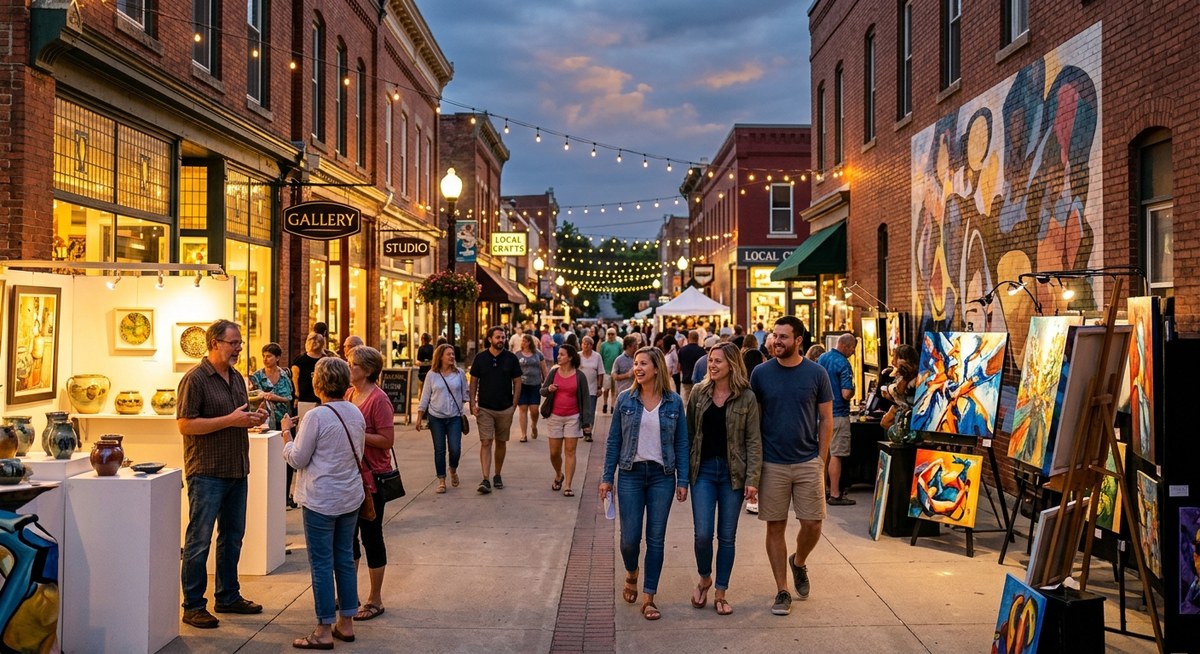
Imagine a Saturday evening when storefront windows glow with local light, gallery doors swing open, and neighbors from every generation stroll the sidewalks, trading smiles and stories as music and colors spill into the street. That scene is more than charming scenery. It is a practical strategy for revitalizing small town downtowns. For communities like the Sault Area, art walks offer a tangible path to economic vitality, cultural visibility, and stronger social ties. They turn ordinary blocks into living canvases where art, business, and community life intersect in meaningful ways. In short, art walks are more than events; they are engines of renewal.
What are art walks and why they matter
Art walks are structured evenings or weekends when artists open studios or display work in storefronts, galleries, libraries, and public spaces along a walkable route. They blend visual art with live performances, artist talks, and interactive experiences. The aim is to create accessible, joyful spaces where residents and visitors can encounter art in everyday places, meet artists, and connect with local heritage and stories.
In small towns, art walks matter for several reasons:
Economic vitality and local business momentum
- Foot traffic rises during walk nights, benefiting retailers, eateries, and service providers.
- Short excursions keep dollars circulating within the downtown and encourage spontaneous purchases.
- Repeat events help budding artists and craftspeople network with potential customers and partners.
Cultural visibility and creative identity
- Art walks showcase the town as a creative place, attracting visitors who might not otherwise explore the area.
- They provide a platform for Indigenous art and local heritage to be celebrated through contemporary work and storytelling.
- The events become a living gallery that evolves with each season, reflecting the community’s values and aspirations.
Social connection and community pride
- People from different age groups and backgrounds encounter one another in meaningful ways.
- Art walks create shared experiences that reduce social isolation and strengthen civic life.
- Residents gain opportunities to contribute to the town’s cultural narrative through volunteering and participatory art projects.
Learning, collaboration, and youth engagement
- Students and emerging artists gain exposure, mentorship, and hands on experience presenting work publicly.
- Cross sector collaboration with businesses, schools, libraries, and cultural organizations expands the town’s creative capacity.
- Cultural education for attendees grows organically through artist talks, demonstrations, and hands on activities.
A town transformation story you can model
Think of an ordinary main street that once felt sleepy between summer festivals. An art walk program begins with a small core group of artists, a handful of storefront partners, and a weekend date that aligns with a local farmers market. Within a year the route expands to include a library pop up, a student art exhibit in a vacant storefront, and a public sculpture as a centerpiece for the walking path. Restaurants stay open late, a coffee shop hosts a live mural painting, and a small gallery night becomes a monthly anchor.
What changed is not just the art itself, but the way residents and business owners collaborate. They share marketing responsibilities, host speaking events for Indigenous artists, and codify a plan to maintain and rotate exhibits so that the public space remains dynamic. The town learns to treat its downtown as a cultural district rather than a collection of vacant storefronts. The result is a downtown that feels safer, more welcoming, and economically resilient.
Why the Sault Area can benefit from art walks
The Sault Area already celebrates the arts and supports artists through programs, exhibitions, and community partnerships. An art walk adds a recurring rhythm that complements gallery nights, library art pop ups, and student exhibitions. It brings together separate efforts into one cohesive downtown experience. When well organized, art walks can:
- Increase foot traffic on traditionally slow evenings.
- Create opportunities for Indigenous artists to share stories and processes through public programming.
- Provide a platform for local musicians, poets, and performance artists to collaborate with visual artists.
- Help developers and city leaders see downtowns as creative places worth preserving and investing in.
Practical steps to plan a successful art walk in a small town
Launching an art walk requires thoughtful planning and community buy in. Here is a practical, scalable plan suited for the Sault Area and similar towns.
1. Build a coalition
- Gather a diverse steering group that includes artists, business owners, librarians, school representatives, and municipal staff.
- Define shared goals such as celebrating local art, boosting downtown commerce, and increasing accessibility to the arts.
- Establish roles for coordination, promotion, programming, safety, and accessibility.
2. Map the route and programming
- Identify a walkable route that connects shops, galleries, public spaces, and cultural venues.
- Plan a mix of activities per stop such as artist demonstrations, live music, gallery openings, and mini talks.
- Integrate Indigenous art and local heritage storytelling into the program to honor community roots.
3. Secure permits, safety, and accessibility
- Check local ordinances for street closures, outdoor demonstrations, and temporary signage.
- Ensure the route is accessible to people with mobility devices and families with strollers.
- Plan for safety with lighting, security partners, and clear emergency procedures.
4. Recruit artists and partners
- Invite a broad cross section of artists including visual artists, writers, dancers, and musicians.
- Encourage collaborations with local schools and libraries to feature student and community projects.
- Seek sponsorship from local businesses that benefit from weekend foot traffic.
5. Promote the event
- Create a simple, consistent branding package for posters, social media, and storefront banners.
- Use a centralized calendar so residents know what to expect and when.
- Highlight Indigenous art, local history, and family friendly elements to broaden appeal.
6. Develop programming and accessibility options
- Include guided tours, artist led demonstrations, and interactive art activities for all ages.
- Provide multilingual materials if needed and ensure accessible formats for captions and descriptions.
- Offer quiet zones or sensory friendly timings for inclusivity.
7. Plan funding and sustainability
- Start with seed funding from local government, cultural councils, and private donors.
- Create a small annual budget that covers signage, insurance, permit fees, and artist stipends.
- Explore in kind support such as donated space, volunteer time, and merchandise sales.
8. Launch and iterate
- Hold a soft launch with a limited route and a tight program to test logistics.
- Gather feedback from artists, businesses, and attendees after the event.
- Use findings to refine routes, times, and programming for the next edition.
Integrating art walks with other events and programs
Art walks can be a hub that links various cultural activities in the town. Consider these integration strategies:
- Pair art walks with gallery nights to create a broader cultural weekend.
- Feature library pop ups on walk nights to extend access to books, readings, and author talks.
- Incorporate student exhibitions in vacant storefronts or in school galleries that are visible along the route.
- Include Indigenous art funding and programming as a core element to ensure representation and support for Indigenous artists.
Using technology to enhance the experience
Technology can expand participation and storytelling without compromising the human center of the event. Consider:
- QR codes at each stop linking to artist bios, process notes, or audio guides.
- Live social media streams and scheduled posts to keep remote audiences engaged.
- Augmented reality experiences that reveal historical layers of the town when viewed through a smartphone.
- A simple mobile guide that maps the walk, lists artists, and provides accessibility information.
Measuring impact and learning along the way
To understand the value of art walks and to sustain them, track both quantitative and qualitative measures:
- Foot traffic and dwell time at key stops
- Retail sales and restaurant take rates during and after the event
- Artist participation numbers and the diversity of media
- Social media reach, engagement, and hashtag usage
- Community feedback on accessibility, safety, and overall experience
- Media coverage and overall visibility of the downtown
Funding and support avenues worth exploring
A successful art walk balances creative ambition with practical funding. Here are common sources:
- Local government cultural funds and downtown improvement grants
- Private sponsors and business partnerships that benefit from the increased evening presence
- In kind contributions such as venue space, sound equipment, or volunteer time
- Community foundations and Indigenous art grants focused on cultural preservation and education
- Small ticketing options for added programming such as artist talks or workshop sessions
Roles and responsibilities in a thriving art walk ecosystem
A healthy art walk network depends on clear roles and open communication. Consider these roles:
- The coordinating body: oversees planning, partnerships, and sustainability.
- Artists and performers: create the content and highlight the town’s creative talent.
- Local businesses: host stops, offer promotions, and provide hospitality.
- Libraries and schools: extend reach with programs and exhibitions.
- City and cultural organizations: provide permits, safety guidance, and strategic alignment with downtown revitalization goals.
- Volunteers: support setup, signage, wayfinding, and accessibility tasks.
Sustainability and growth beyond the first edition
To keep the momentum going, consider strategies that maintain interest and growth year after year:
- Create a rotating artist roster so new voices continuously appear along the route.
- Establish recurring annual dates so residents can plan ahead and new attendees can discover the event.
- Build a small endowment or reserve fund to cover basic insurance, staffing, and contingency costs.
- Formalize partnerships with Indigenous communities to ensure respectful representation and shared programming.
- Document stories and memories from each walk and share them through a digital archive or print newsletter.
Accessibility, equity, and inclusive storytelling
A town that welcomes everyone on its art walks is a town that grows stronger. Be mindful of:
- Multilingual materials and interpreters for live events
- Clear wayfinding and accessible restrooms
- Seating, shade, and weather backup plans
- Affordable or free programming to reduce barriers to participation
- True representation of local communities, including Indigenous artists, women, youth, and seniors
How art walks align with other Sault Area arts initiatives
Art walks fit naturally with the broader goals of the Sault Area Arts Council. They complement gallery nights by creating a public facing route, align with library art pop ups by sharing space along the same corridors, and amplify student exhibitions by bringing classrooms into the heart of downtown. By weaving these programs together, the community builds a more cohesive arts ecosystem that supports artists at every career stage and invites residents to participate as co creators in the town’s cultural story.
A practical template for the Sault Area community
If you are part of the Sault Area Arts Council or a local partner, here is a compact blueprint to adapt:
- Start with a three stop route on a single evening. Include a gallery, a storefront, and a library space.
- Invite five to seven artists across disciplines to participate in the inaugural event.
- Secure a sponsor for a small but meaningful perk such as a free art print or community mural workshop.
- Promote through social media, local radio, library bulletin boards, and school networks.
- Collect brief feedback from attendees and participants to improve the next iteration.
The role of Indigenous art funding and partnership
Funding and programmatic support for Indigenous art should be embedded in every art walk planning cycle. This includes:
- Inviting Indigenous artists to lead demonstrations and share stories about cultural practices
- Creating a small grant pool for Indigenous artists to present new work
- Providing programming that respectfully contextualizes artifacts and stories
- Ensuring decision making includes Indigenous voices in governance
Indigenous art is not simply decorative; it is living culture. A thoughtfully designed art walk can support Indigenous communities while teaching broader audiences about heritage, resilience, and contemporary creativity.
Conclusion: A brighter, more vibrant downtown
Art walks are more than pretty evenings on a calendar. They are a practical mechanism for revitalizing small town downtowns, strengthening local economies, and building lasting social bonds. For the Sault Area, they offer a path to connect artists with residents, schools with storefronts, and Indigenous art with public storytelling. When planned with care, inclusion, and a clear sustainability plan, art walks become a recurring heartbeat for the community.
If you are excited to explore how art walks could transform your neighborhood, start with a conversation. Reach out to the Sault Area Arts Council, gather neighbors and business owners, and begin mapping a route that reflects your town’s unique personality. The next walk could be the turning point that reveals all the ways a downtown can shine when creativity, collaboration, and care come together.
- Involve youth through student exhibitions and workshops that live on the route
- Highlight local entrepreneurs by coordinating walk night promotions with shop openings
- Celebrate Indigenous art through collaborative installations and culturally respectful programming
- Use technology to amplify reach and preserve memories for years to come
Together, we can create a series of art walks that not only celebrate the arts but also cultivate a thriving, inclusive, and resilient downtown that future generations will be proud to call home.